
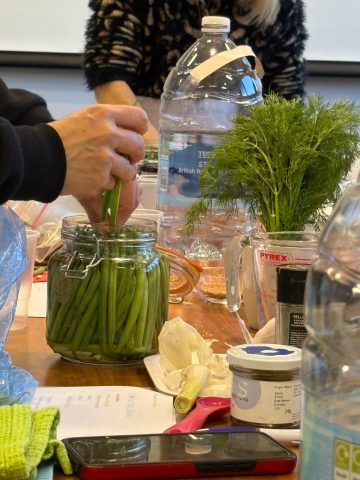
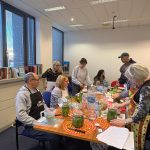
On Sunday 23rd November, The Together Plan’s beautiful location in Watford, home to the charity’s thriving humanitarian aid project, became the setting for a sensory and deeply nostalgic pickling workshop. As participants arrived, they were greeted with warmth, tea and coffee, fresh fruit, and an inviting spread of cookies. Before the hands-on session began, Debra Brunner, co-founder of The Together Plan, offered a short presentation introducing the charity’s work, including its ambitious mission to build a Jewish heritage route across Belarus. With this context in mind, the group stepped eagerly into an experience that blended history, culture, memory, and food.
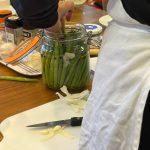
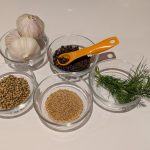
The focus of the workshop was the age-old Eastern European craft of salt pickling, demonstrated through the preparation of traditional pickled green beans. Bowls filled with garlic cloves, bay leaves, mustard seeds, coriander seeds, and peppercorns were passed around, and with the final addition of fresh dill, the room quickly filled with the heady aromas of the Old World. As the fragrances intensified, so too did the energy in the room; conversations grew animated, memories surfaced, and a sense of shared heritage settled comfortably among the participants.
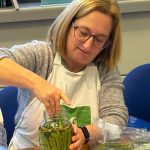
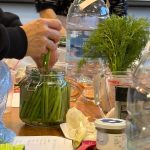
Among those taking part was Debra’s mother, renowned Yiddish singer Hilda Bronstein, whose parents were Polish Jewish immigrants. For Hilda, the aromas, the anecdotes, and the familiar ritual of preserving vegetables in brine brought her right back to her childhood in London’s East End. She spoke of the delicatessens bustling with life, pickles packed in barrels, and the sounds and smells of those days gone by. “It brought everything back,” she said, her voice thick with emotion. And indeed, when the workshop concluded, she left with a noticeable spring in her step, uplifted by the sense of reconnection.
To complement the hands-on learning, Debra treated the group to a batch of her own garlic-infused crunchy cucumbers, prepared earlier using The Together Plan’s recipe for Traditional Belarusian Pickled Cucumbers. The beloved “super-quick” recipe produced exactly what it promised: crisp, flavourful cucumbers that tasted unmistakably authentic and delighted everyone fortunate enough to sample them.
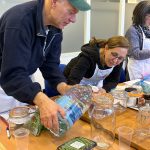
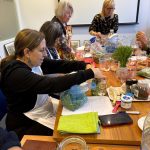
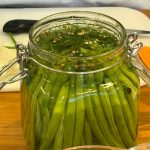
As the jars were sealed and the last bites of cucumber were enjoyed, it was clear the workshop had achieved something profound. It was more than a lesson in food preservation, it was a journey through memory and heritage. Our East European ancestors would pickle vegetables grown in their gardens and dachas long before the advent of refrigeration, ensuring a steady supply of healthy vegetables throughout the cold winter months. Indeed this is a ritual that continues in Belarus today. For the Jewish communities of Eastern Europe, food traditions like pickling have long served as anchors of identity, resilience, and continuity.
On that November afternoon in Watford, surrounded by spices, stories, and shared experiences, Debra Brunner brought that heritage to life. Through the simple, meaningful act of pickling, she reminded everyone present that food carries extraordinary power, the power to connect us to our past, to one another, and to the traditions that shape who we are.
The day after the workshop, this message reached us:
This is just a few inadequate words to say thank you for such a lovely afternoon yesterday. Your pickling demonstration was full of surprises, not the least of which was the evocative aroma which is currently locked into the pickling jar now sitting in my kitchen. I can’t wait to open it tomorrow and share the contents with my husband (when they are ready) who, I know, will recognise the flavour from his childhood days in London’s East End. Wow! You cannot know what magic you have conjured.
Debra will be running her pickling workshop online on December 7th – click here to book.
J