
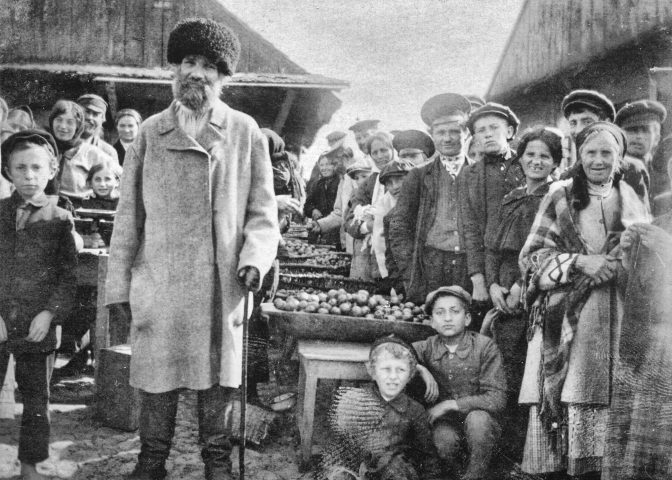
The story of Jewish Kamenets, or Kamyanyets, in Belarus is a tale that stretches across centuries, woven into the history of a small town on the banks of the Liasnaja river, near what is now Brest. The settlement was first mentioned in written sources between 1276 and 1278, when a stone fortress was built to guard the northern boundaries of the principality of Volhynia. A town soon grew around this fortress, its streets tracing the rhythm of life that would continue for generations. Jewish presence in Kamenets can be traced back to the 15th and 16th centuries, with records showing Jews passing through or residing temporarily as early as 1465, and by the early 1500s, permanent settlement had begun to take root.
By the middle of the 18th century, Jewish families had become a well-established part of the town. In 1766, community tax registers recorded 886 Jews within the local kahal, the self-governing Jewish community organization that oversaw religious, social, and economic life. Over the course of the 19th century, the population grew steadily. By 1830, about 1,517 Jewish residents lived in 99 households, nearly evenly split between men and women. By the 1897 Russian Empire census, the Jewish population had risen to 2,722, making them the majority in Kamenets. These families built synagogues, schools, and engaged in trade, crafts, and small-scale industry, contributing to the town’s vibrancy and economy.
-
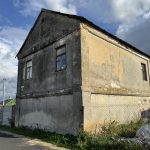
- Typical house of a common Jewish trader in Kamenets Photo credit: The Together Plan
-
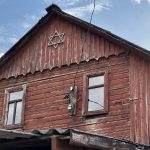
- Jewish house in Kamenets with original Star of David Photo credit: The Together Plan
-
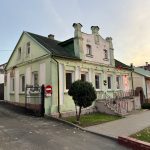
- House of Yosel (Yosef) Vigutov, described as a merchant from the Kamenets‑Litovsk community and part of the body representing the local kehillah before the war. Photo credit: The Together Plan
-
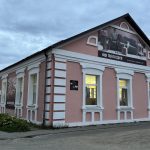
- House of Rabbi Baruch Ber (Dov) Leibowitz, head of the Kaminetz Yeshiva between 1926 and 1939 Photo credit: The Together Plan
The early 20th century brought further change. Following World War I and the Russian Revolution, Kamenets became part of the Second Polish Republic after the Riga Peace Treaty of 1921. During the interwar years, the Jewish community continued to flourish, with 1,902 Jews making up 81% of the town’s population in 1921, and by 1938–1939, estimates suggest Jews represented between 80 and 92% of 3,800 to 4,200 residents. The town’s strategic location on the Brest–Minsk rail line and its compact layout are preserved in Polish military maps from the 1930s, which show the bustling town and its centrality to trade and travel.
This vibrant life came to an abrupt and tragic end during the Holocaust. On June 22–23, 1941, Nazi Germany invaded the Soviet Union, and Kamenets fell under German occupation. Within weeks, the occupiers established the Kamyenyets Ghetto, confining the town’s Jews along with those deported from surrounding areas. According to the 1939 census, 3,909 Jews lived in Kamenets, representing approximately 92% of the population. Over the next three years, systematic persecution, forced labour, and mass executions decimated the community. Many were killed locally or transported to execution sites, and today memorials mark these locations, standing as silent witnesses to the thousands who perished.
-
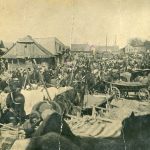
- The Market on Market Square in Kamenets Photo courtesy of Andrey Astashenya
-
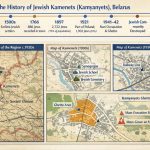
- Jewish Kamenets – maps and timeline
-
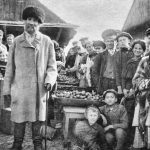
- On the Market Square, First World War Photo courtesy of Andrey Astashenya
-
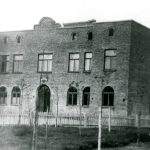
- The Yeshiva, now the House of Culture. Photograph taken after the Second World War Photo courtesy of Andrey Astashenya
fter liberation in July 1944, only a small number of survivors returned. Jewish life was never rebuilt as it had been. During the Soviet era, communal institutions did not re-emerge, though monuments were erected at execution sites to preserve the memory of those lost. By the early 21st century, Kamenets’ population was estimated between 6,000 and 9,000, with little trace of the once-thriving Jewish community except in archives, oral histories, and preserved maps showing pre-war Jewish quarters and sites of wartime atrocities. Today, efforts to remember and commemorate Jewish Kamenets focus on education, memorialisation, and the careful study of its maps and records, ensuring that the history of this remarkable community is not forgotten.
As part of our work to build a Jewish cultural heritage route in Belarus – we create short films about the Jewish shtetls in the country and we are excited to share here our latest film about Jewish Kamenets.