
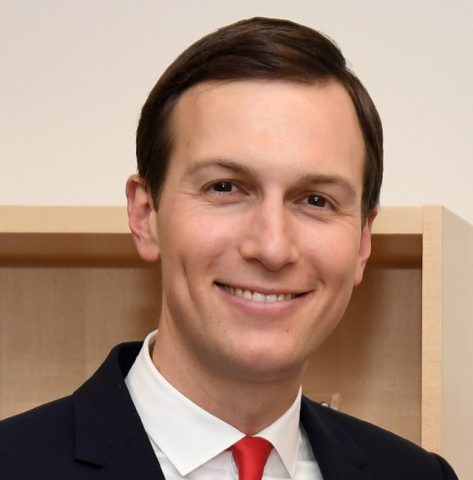
Jared Kushner at the US Embassy Dedication in Jerusalem 2018 Photo credit: U.S. Embassy Jerusalem, CC BY 2.0 via Wikimedia Commons
The following is an adaptation of an interview conducted by journalist Alla Bibikova with Tamara Vershitskaya, who serves as The Together Plan’s Jewish Heritage specialist in Novogrudok. The original article was featured in the September 3rd edition of the Belarusian newspaper Grodnenskaya Pravda. This is the week when the final Israeli hostages have at last been released, two years after their abduction on October 7, 2023, and we feel that this article holds profound significance. In recognition of the extraordinary efforts made by the Trump family and the presidential team in helping to bring about this long-awaited moment in history, we are proud to share it.
Does our history, heritage, and connection to personal stories shape who we are and inspire us to take steps toward repairing the world? That is for you to decide.
ROOTS THAT GIVE STRENGTH
How the Kushner family from the Belarusian town of Novogrudok became world-famous, why the descendants of the Kushner family are so drawn to their ancestral hometown, and how this story connects to the 45th and 47th President of the United States, Donald Trump.
Two Hundred Metres to Freedom
Before the Great Patriotic War, Jews made up a significant part of the population of ancient Novogrudok. They developed businesses, supported the Jewish community, and made the town richer and more beautiful. The close-knit Kushner family — father, mother, and four children — lived on Market Square, in the very centre of town.
The head of the family, Zeidel Naum Kushner (the surname means “furrier” in Yiddish), was a skilled leather and fur craftsman. His hats, collars, and coats were sold in his own shops and were popular among townspeople. But then war broke out, shattering the peaceful life of Novogrudok overnight.
A bomb dropped by the Nazis on the town centre in 1941 destroyed the Kushners’ home — and that was only the beginning of their suffering. Soon after, their eldest daughter Esther was executed along with other Jews during the first mass shooting on December 8, 1941. Like other Jews of Novogrudok, the family was forced into the ghetto. During the occupation, the Nazis murdered 11,000 Jews from Novogrudok and nearby villages.
On May 7, 1943, during the third wave of ghetto liquidation, the Nazis executed Zeidel’s wife, the mother of the family, Chinda Kushner. Realising their only hope was escape, the ghetto prisoners on Korelichskaya Street began to dig a tunnel with their bare hands, spoons, and makeshift tools, hiding their efforts from the guards. In four months, they dug 200 meters starting under the bunks of a barrack and ending beyond the ghetto fence. Zeidel’s son Khonya helped dig and his daughters Raya and Leah helped to hide the soil.
The escape took place on the night of September 26, 1943. Even those who hadn’t planned to flee crawled into the tunnel. Tragically, Khonya Kushner was killed right at the exit. He was prisoner number 76, and together with Shaul Gorodinsky (number 77) they dug the narrow 70-by-70 cm passage. In all, 59 people were killed during the escape and the manhunt that followed; the fate of another 42 remains unknown. Zeidel Kushner, 45 years old, crawled through the 200 meters to freedom as prisoner number 143. His daughters – Raya (Rae) followed as number 144 and Leah as number 145.
-

- Сhonon (Khonya) Kushner. 1930s Photo credit: From Tamara Vershitskaya’s personal collection.
-

- From right to left: Rae, Nachum (Naum), Leah Kushner after liberation Photo credit: From Tamara Vershitskaya’s personal collection.
-

- Naum Kushner, father of Rae Kushner, early 1930s. Photo taken in Poland before the beginning of World War II Photo credit: From Tamara Vershitskaya’s personal collection.
-

- Hinda Kushner Photo credit: From Tamara Vershitskaya’s personal collection
According to Dr. Betty Brodsky Cohen, the daughter of survivor Fania Dunetz Brodsky and author of Tunnel of Hope: The Great Escape from the Novogrudok Forced Labour Camp, 235 people escaped through the tunnel. Of those, 126 survived and joined the Bielski partisans, the Jewish resistance group known as the “Forest Jerusalem.”
“Zeidel and his daughter Raya described their path to the Bielski partisans differently,” says Tamara Vershitskaya, founder of the Museum of Jewish Resistance and The Together Plan’s Jewish heritage specialist in Belarus. “Zeidel wrote that they first joined Russian partisans for a month, until the commander told them, ‘Here’s a cart and a piece of lard – go find the Jews.’ Raya recalled that they first sought refuge with a Polish farmer near Novogrudok, spent the night, and were then shown the way to the partisans.”
However it happened, the Kushners reached the Bielski detachment by mid-October. There they met Yosef Berkovich, a carpenter from a poor family who had escaped from the Dvorets Ghetto. In the Forest Jerusalem, as the Bielski camp was called, Raya and Yosef pledged to stay together. Thus began their lifelong love story.
-

- Leah Kushner after the war Photo credit: From Tamara Vershitskaya’s personal collection
-

- Rae Kushner after the war Photo credit: From Tamara Vershitskaya’s personal collection
-

- Leah Kushner Photo credit: From Tamara Vershitskaya’s personal collection.
-

- Naum Kushner with children, 1930s Photo credit: From Tamara Vershitskaya’s personal collection
In the Forest Jerusalem
The Jewish partisan detachment was formed in June 1942 and was unique. About 150 armed fighters made up the combat group (later named after Ordzhonikidze), while the rest, the elderly, women, and children struggled to survive deep in the Naliboki Forest, 3.5 km from the village of Kletishche in Stolbtsy district, amid the terror of Nazi occupation.
“The Jews went to the forest simply to survive,” continues Vershitskaya. “The camp became a real village in the forest. They built workshops, a bakery, laundry, hospital, school, kindergarten, synagogue, even a court and prison. They also kept livestock. Zeidel Kushner continued his trade there, sewing hats and coats for partisans and tanning hides. He even received a commendation from Tuvia Bielski. The Bielski workshops also helped other partisan units, repairing weapons and sewing clothes.”
Tuvia Bielski valued saving one Jewish life above killing ten enemies. That belief made the Bielski group unique not just in Belarus, but in all of occupied Europe. During the war, more than 1,300 Jews passed through their camp; only about 50 were lost.
This remarkable story was depicted in the 2008 Hollywood film Defiance, starring Daniel Craig as Tuvia Bielski and George MacKay as Aron. But the story isn’t over: a new 8-part film about the Novogrudok tunnel as a symbol of hope is now being developed by director and screenwriter Vova Lert the grandson of Novogrudok native Isaac Ulert, who himself escaped through that tunnel.
In 2019, descendants of the partisans, children and grandchildren of those saved, came from the U.S., Australia, Europe, and Asia to Novogrudok, retracing the path of their ancestors. Relatives of the Bielski brothers also attended.
Through Hardship to Success
After Belarus was liberated, the Kushners returned to Novogrudok to find only ruins. In 1945, taking advantage of Stalin’s temporary emigration policy, they left for Romania. In a Budapest synagogue, Raya Kushner married Yosef Berkovich who took his wife’s surname to simplify emigration.
Together, they crossed borders on foot, enduring great hardship, and eventually reached a displaced persons camp in Cremona, Italy. From there, they sought passage to the United States finally arriving in 1949.
“Life in a new country was difficult at first,” says Vershitskaya. “They lived in one room with their firstborn. Yosef worked three jobs as a carpenter, earning $90 a month, saving $5 each month. Eventually, he bought a small plot of land in New Jersey, built and sold a house, and reinvested. That’s how the Kushners began building their construction empire, from just five dollars, which would one day make their descendants billionaires.”
Returning to Their Roots
Raya and Yosef Kushner raised four children: Murray, Charles, Linda, and Esther (named after Raya’s sister killed by the Nazis). Charles continued his father’s real estate business, founding Kushner Properties, becoming a billionaire and a leader of the New York Jewish community. He now serves as the U.S. Ambassador to France.
“We’ve been in touch with the Kushners for more than twenty years,” says Vershitskaya. “Charles has visited Novogrudok several times with his grandchildren. I showed them the ghetto barrack from which their ancestors escaped and the execution sites. For him, it’s vital that his descendants know and draw strength from their Belarusian roots.”
Charles Kushner also funded the Wall of Memory at the Museum of Jewish Resistance (located on the site of the former ghetto), inscribed with the names of all who escaped through the tunnel. The Seryl and Charles Kushner Family Foundation donated $36,000 for the project, while Murray Kushner’s Kushner Real Estate Group sponsored an open-air exhibition telling the story of the escape through survivors’ testimonies.
The Wall of Memory was unveiled on July 8, 2019, marking the 75th anniversary of Novogrudok’s liberation. Among attendees were Raya’s granddaughter Shelly Davis (Charles’s niece) and Leah Kushner’s daughter and granddaughters.
-

- The concealed tunnel entrance, the Museum of Jewish Resistance Photo credit: The Together Plan
-

- Memorial wall, the tunnel and exhibition in the garden of the Museum of Jewish Resistance Photo credit: The Together Plan
-

- The tunnel path showing the outline and direction of the tunnel Photo credit: The Together Plan
-

- Entrance to tunnel – Museum of Jewish Resistance, Novogrudok Photo credit: The Together Plan
-

- Memorial wall in the garden of the Museum of Jewish Resistance Photo credit: The Together Plan
“For local residents, the story of the Novogrudok ghetto is not just history but a personal tragedy of their homeland,” says Natalia Zhishko, head of youth and cultural affairs. “Commemoration ceremonies are held here; descendants bring flowers and light candles. It’s a place that reminds us of the price our ancestors paid for peace and freedom.”
Charles himself has not yet seen the completed Wall he helped fund. His last visit was in 2016; a later trip was prevented by the COVID-19 pandemic.
Jared Kushner – The American President’s Son-in-Law
Charles and his wife Seryl have four children: Jared, Dara, Nicole, and Joshua. Naturally, the most well-known is Jared Kushner, the husband of Donald Trump’s daughter Ivanka.
Born in 1981, Jared graduated from a Jewish day school in Bergen County, New Jersey, and later attended Harvard University, earning a degree in public administration. In 2007, he completed law and business degrees at New York University. In October 2009, he married Ivanka Trump, who converted to Judaism before their Orthodox wedding.
Jared played a key role in Donald Trump’s 2016 presidential campaign, acting as strategist, speechwriter, and adviser. Later, as Senior Advisor to the President, he worked on criminal justice reform, veterans’ affairs, and government innovation. Jared and Ivanka have three children: 14-year-old Arabella Rose, 12-year-old Joseph Frederick, and 9-year-old Theodore James.
Jared first visited Novogrudok as a child in 1989, when his father Charles brought the family and his mother to their ancestral hometown. His brother Joshua has also been there. The family cherishes and preserves their history.
-

- Leah Kushner with her daughter Helen at the Museum of Jewish Resistance in 2007 Photo credit: From Tamara Vershitskaya’s personal collection.
-

- Tamara Vershitskaya and Charles Kushner in New York 2020. Photo credit: From Tamara Vershitskaya’s personal collection
-

- Jared Kushner at the US Embassy Dedication in Jerusalem 2018 Photo credit: U.S. Embassy Jerusalem, CC BY 2.0 via Wikimedia Commons
-

- Leah Kushner (in the brown dress) at the opening of the JRM in Novogrudok in 2007 Photo credit: From Tamara Vershitskaya’s personal collection
Shared Memory for the Future
“There’s a chance the Kushners will come back to Novogrudok,” says Vershitskaya. “When I congratulated Charles on his new appointment and invited him, he said his greatest wish is to return. We pray it will happen. His visit now would be so meaningful as we’re developing a new project to transform the 2007 Museum of Jewish Resistance into a full Museum of the Holocaust and Resistance” and The Together Plan is the leading this campaign outside of Belarus.
The new museum is a joint effort of the Belarusian Peace Foundation, the Jewish Religious Union of Belarus, and the Novogrudok District Executive Committee. The initial exhibit will take about two years to create, and the full museum around five.
“It will be a true Museum of Life, telling how Belarusian Jews, despite Nazi cruelty, resisted heroically and survived,” says Natalia Zhishko. “Its centrepiece will be the partially preserved escape tunnel, artifacts from the Bielski partisan camp, and exhibits about the Righteous Among the Nations – brave Belarusians and Poles who risked their lives to save Jews.”
The new museum will preserve the stories of Jack Kagan, the Kushner family, and many others whose contributions shaped the region’s cultural and economic life for centuries, ensuring future generations understand their history and prevent the return of fascism.
As a good omen, a new Jewish community has recently formed in Novogrudok, led by Dmitry Bobrovsky, a descendant of the righteous Bobrovsky family, who gave their lives saving Jews during the war.
The next steps
The Together Plan is now leading a campaign to establish a Holocaust Museum in Novogrudok which will stand adjacent to the Museum of Jewish Resistance. For more information please get in touch: [email protected]
The reunion of 2019
In 2019,Tamara Vershitskaya organised a reunion in the Naliboki Forest. Descendants of survivors of the Bielski Partisans from all over the world travelled to Belarus for an unforgettable gathering including Aron Bell (Bielski) who was then the last surviving Bielski brother. The reunion was deeply moving and incredibly powerful and this sacred space in the forest continues to be a vitally important heritage site that it is hoped will become and extended part of the new museum under development.
Click on the images to enlarge them:
-

- Third from the left: Helen Zelig (Leah’s daughter) with her two daughters, Tamara Vershitskaya, Shelley Davis (Kushner) far right Photo credit: Tamara Vershitskaya’s personal collection
-
- Aron Bell (Bielski) at the reunion in the Naliboki forest 2019 Photo credit: Tamara Vershitskaya’s personal collection
-
- Reunion in the Naliboki forest 2019 Photo credit: Tamara Vershitskaya’s personal collection
-
- Reunion in the Naliboki forest 2019 Photo credit: Tamara Vershitskaya’s personal collection
-
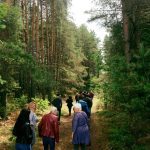
- Reunion in the Naliboki forest 2019 Photo credit: Tamara Vershitskaya’s personal collection
-

- Reunion in the Naliboki forest 2019 Photo credit: Tamara Vershitskaya’s personal collection