

Israel Belkind Image credit: Assafn at he.wikipedia, Public domain, via Wikimedia Commons
At The Together Plan, our work is deeply rooted in the layered history of Jewish life in Belarus. We look to the past to understand the present, uncovering powerful, and often little-known, stories of resilience that resonate with our mission. These stories often begin in the cramped, impoverished shtetls of the Pale of Settlement—a region that included modern-day Belarus and was, for over 120 years, a place of limited opportunity and pervasive discrimination for millions of Jews.
It was from this crucible of oppression that new dreams and new ideas formed, which ultimately gave rise to what became known as political Zionism.
a landscape of limitation and a spark of hope
For centuries, Jewish life in the Russian Empire was defined by the Pale. Legal restrictions barred Jews from many professions, from moving freely, and from accessing higher education. Life was precarious, often shattered by violent pogroms. For many, the future seemed like a closed door.
The wave of pogroms that began in 1881 became a terrible turning point. While hundreds of thousands of Jews embarked on a journey to the United States in search of safety, a smaller, idealistic group turned their eyes in a different direction: towards their ancestral homeland, Eretz Yisrael.
the birth of a dream in a Belarusian shtetl
This is where the story of Israel Belkind begins. Born in 1861 in Lahoysk, in the Minsk region of Belarus, Belkind was a teacher and a visionary. In response to the crises of 1881, he founded the BILU movement—an acronym from the Hebrew verse in Isaiah, “Beit Ya’akov Lekhu Ve-nelkha” (House of Jacob, let us go!).
BILU’s goal was revolutionary. While previous waves of immigration to Palestine were primarily for religious reasons, Belkind and his fellow Bilu’im were secular pioneers. They were inspired by a mix of socialist ideals and a nationalist yearning to reclaim the land through labour. Their aim was not just to live in the Holy Land, but to build a self-sufficient Jewish state there.
the arduous path of the Pioneers
The first group of fourteen Bilu’im, mostly university students, arrived in Ottoman Palestine in 1882 with immense idealism but little practical experience. Forbidden from owning land for generations in Russia, they had no farming background. They faced a harsh reality: an impoverished landscape, disease, and a lack of resources.
They established a farm in Rishon LeZion, but within months, they faced starvation. Later, a smaller group struggled to survive in Gedera, battling poor soil and security threats. Their diaries tell a story of immense hardship, where a meal might consist only of radishes and potatoes. Ultimately, the BILU movement as a practical settlement effort could not withstand these challenges and disbanded.
-
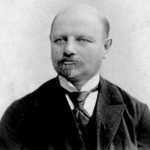
- Israel Belkind Image credit: Assafn at he.wikipedia, Public domain, via Wikimedia Commons
-

- BILU members Ze’ev Vladimir Dubnov, Ya’acov Shertok and Chaim Chissin in Russia in 1890 Image credit: The David B. Keidan Collection of Digital Images from the Central Zionist Archives (via Harvard University Library) Public domain, via Wikimedia Commons
-
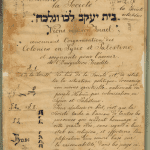
- BILU Charter 1882, Image credit: Public domain, via Wikimedia Commons {{PD-US}}
-
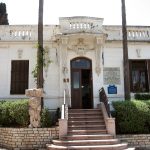
- BILU Museum in Gedera Image credit: דניאל ונטורה, CC BY-SA 3.0
how the land was won – acquisition and survival
A critical and often overlooked aspect of this story is how these idealistic but impoverished pioneers acquired land. They did not have the capital to purchase it themselves. Their journey to secure a foothold in the country was fraught with difficulty and reliance on others:
- Initial Reliance on Others: The Bilu’im’s first attempt at farming was in Rishon LeZion, on land owned by a group of Jews from Jerusalem. The Bilu’im were invited to work the land as labourers, but this arrangement quickly failed due to inexperience and conflicts.
- Direct Purchase Through an Intermediary: The core group’s breakthrough came in 1884 with the establishment of Gedera. A sympathetic official, Yehiel Michal Pines of the French Jewish organization Alliance Israélite Universelle, helped them purchase about 750 acres of land from the Arab village of Qatra. However, the transaction was legally precarious under Ottoman law, and the pioneers lacked the funds to develop the land or pay the resulting debts.
- The Crucial Intervention of Baron Rothschild: On the brink of collapse, the Bilu’im were saved by the patronage of Baron Edmond de Rothschild. His administrators took over the settlement’s finances, paid off its debts, and regularised the land purchase. This intervention was not a gift of land, but an essential rescue that secured their tenuous claim and allowed the settlement to survive.
This process highlights a key theme: the pioneering spirit was vital, but its success depended on the financial support of the wider Jewish diaspora.
a legacy forged in failure
Yet, to call BILU a failure is to misunderstand history. While their agricultural cooperatives did not last, their vision was profound and ahead of its time. The BILU dream—of Jews building their own homeland through collective labour—laid the ideological groundwork for the kibbutz and moshav movements that would define the future State of Israel. They were vital forerunners to the political Zionism that Theodor Herzl would famously organise fifteen years later.
why this history matters to us today
The story of Israel Belkind and the BILU movement is a quintessential story of Belarusian Jewish resilience. It is a history that is often overlooked in mainstream narratives, which frequently bypass the rich and complex Jewish life of Eastern Europe before, during, and after the Holocaust.
At The Together Plan, we believe that unearthing these stories is an act of preservation and empowerment. In a time of rising antisemitism, understanding the roots of Jewish self-determination and the desperate hope that emerged from the shtetls is more critical than ever. It connects the past to the present and reminds us that the future is built by those who dare to imagine a different path.
By exploring our shared history, we not only honour the dreamers like Israel Belkind but also strengthen the foundations of our community for generations to come.
Click here to read more of our articles.
If you enjoyed this article, you may want to read – “from the Pale to the promised land – how oppression fuelled a dream, the story of Akiva Arieh Weiss” – click here to read the article.