

Spasskaya Street in Polotsk, 1915 Photo Credit: etoretro.ru
Five years ago, we began building something we believed could be transformative. Today, we know it is.
There is a particular kind of question that follows some families for generations. Not a question anyone expects to answer – just one that sits quietly at the edge of everything, passed from grandparent to parent to child like an heirloom with no key. For one of our most recent archive clients, that question had been sitting for a very long time.
His family believed they were direct descendants of Maimonides – the Rambam, one of the greatest Jewish scholars who ever lived. His father believed it. His grandfather believed it. The belief stretched back as far as anyone could remember. But belief and proof are different things, and for 800 years, the proof had been nowhere to be found.
Until he came to The Together Plan.
five years in the making
Our Archive Search Service has been one of the most quietly significant things we have built at The Together Plan. Over the past five years, starting from almost nothing, we have developed a service that reaches into the depths of Belarusian archival collections – many with no index, no order, and no digital presence – and finds the people hidden inside them.
Our archivists read these records by hand. Census lists. Tax rolls. Community registers. Trade licences. Military records. Letters to officials. The documents of ordinary Jewish life in towns and villages that no longer exist as they were – places that were destroyed first by the Nazis, then buried further by decades of Soviet silence.
What we retrieve from those pages is not just data. It is identity. It is the answer to questions people have carried their whole lives.
“They reconstructed our entire line and traced it to Perets, the first of us to appear in the written record, born in Polotsk around 1745.”
In this client’s case, our archivist searched approximately forty separate archival collections to reconstruct his family line from his grandfather Grigory Maymin, born in the shtetl of Nosovichi in 1913, all the way back to the eighteenth century. The research resolved a question that had seemed unanswerable: were his family truly descended from Maimonides, or had they, like the philosopher Solomon Maimon – born near Mir, Belarus, in 1753 – simply taken the celebrated name out of admiration?
The archives answered it. The two families were entirely separate. Solomon Maimon had chosen the name in reverence. This family had carried it by descent. One name, one ultimate source, reached by two entirely different roads across the centuries.
what the records give back
What strikes us most about this story – and about so many of the searches we carry out – is that the archives give back far more than names and dates. They give back texture. They give back life.
For this family, the records revealed a street. Spasskaya Street in Polotsk, where three Maymin households stood clustered together in a wooden-house neighbourhood at the heart of Jewish Polotsk. One selling spirits. One running a tavern. One living next door. A whole family world, contained in a few metres of one street, retrievable now because someone wrote it down and because our archivist had the patience to find it.
-

- Spasskaya Street in Polotsk, 1916 Photo Credit: etoretro.ru

-
- Spasskaya Street in Polotsk, 1915 Photo Credit: etoretro.ru

The records gave back individuals. The woman who lost her grocery shop to a fire and wrote to the tax office asking for mercy. The household whose entire listed property, beyond its tax revenue, was a single cow. The soldiers: one who received a Red Star on 8 May 1945, the very day the war ended, after a road that ran from the Vistula across the Oder to the gates of Berlin. Another, a naval doctor, who treated the wounded through all 872 days of the Siege of Leningrad.
“Watching them meet their own people, generation by generation, felt like a time machine. It is something I will never forget.”
Our client gathered every piece of this into a presentation for his father, his aunt, his cousins, and his siblings. That moment – a family meeting itself across centuries – is what this service exists to create.
-
- former Bristol Hotel building on Spasskaya Street, Polotsk

-
- modern view of Spasskaya Street in Polotsk

-
- former London Hotel building on Spasskaya Street, Polotsk

honesty is at the heart of what we do
Our client, Philip Maymin, wrote something in his testimonial that we want to share, because it goes to the heart of how we approach this work:
“They showed us exactly how far the documents reach, and they were candid about the centuries that still wait to be filled in. They never embellished and never flattered. They read the record carefully and told us the truth, and that is exactly why I trust what they found.”
This matters enormously to us. The history we are working with is real, and the people who lived it deserve to be represented honestly. We will always tell clients clearly what the documents show and where the gaps remain. We will never fill silence with invention.
Sometimes, as in this case, that honesty produces something even more powerful than a complete answer. It produces a trustworthy one.
“We came to The Together Plan with a sentence we had carried for a lifetime. We came away able to see our family, and to know that the name is ours by descent and not by chance. I am deeply grateful, and I recommend them with my whole heart.
what’s coming next: a service transformed
We are incredibly proud of what our archive team has built over the past five years. And we are not stopping here.
We are currently developing a suite of new offerings that will allow people to go even deeper into their connection with Belarus and its Jewish history. Very soon, alongside our archive research, clients will be able to:
- Commission a virtual tour of the village or town where their ancestors lived, or where they themselves were born, brought to life on screen by our team on the ground in Belarus
- Commission a short film of their ancestral place – a documentary portrait of the streets, buildings, and landscapes that shaped their family’s story
- Receive a Heritage Report on their ancestral town or village – a rich account of the history of the Jewish community there: who they were, how they lived, what they built, and what was lost
- Plan a heritage visit with our team guiding every step, from the archival discoveries to the physical places they point toward
This is not just an archive service any more. It is a full journey of discovery – from a name on a page to a street you can stand in, a building you can see, a story you can hold.
hear it directly: join us on 6 September
Philip Maymin, our client – the man whose family question has now been answered, whose ancestors have come back to life on a street in Polotsk – will be joining us for a special online Together Plan event on Saturday 6 September, where he will share his research journey and what he did with everything he found.
It is not often that you get to hear, in someone’s own words, what it feels like to find your family across 800 years of silence. We hope you will join us.
If you have been thinking about starting your own archive search, or if someone in your family has a question that has been waiting too long for an answer, we would love to hear from you. Click here for more information or email us directly at [email protected].
Philip Maymin’s full testimonial can be read here
We are direct descendants of Maimonides. That is our family legacy. My dad told me, and his dad told him, and so on up the line of rabbis and scholars. But Maimonides died more than 800 years ago. His DNA is not available to test. His descendants scattered across many countries. No book records his full family tree. So how were we ever to find the proof?
To make matters even more difficult, others have carried the name Maimon over the centuries without descending from Maimonides at all. The best known is the philosopher Solomon Maimon.
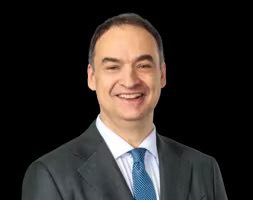
He was born near Mir, in what is now Belarus, in 1753. A brilliant man: Immanuel Kant called him the sharpest of all his critics. Around 1783, in Berlin, he took the name Maimon out of admiration for the Rambam, whose Guide of the Perplexed had transformed his thinking. He came to the name through reverence. Our family’s tradition is that we came to it through descent. Both are honorable. But they are not the same.
And the puzzle was real. Our family’s beginnings in Polotsk reached back to the 1740s, about 250 miles from Mir, a few years before Solomon was even born. The same rare name, the same small country, the same era. And Solomon’s name was famous across Europe long before our surname was ever set down on paper. So which was ours? Were we truly of Maimonides, by descent, or had we, like others before us, simply taken a celebrated name? Our belief said one thing. For the longest time, the record said nothing at all.
This is where The Together Plan changed everything for us. I gave them a single name, my grandfather Grigory Maymin, born in the shtetl of Nosovichi in 1913, and their archivist patiently worked backward from there. They searched about forty separate archival collections, most with no index and no order, reading page after page by hand: census lists, tax rolls, even a grocer’s trade license. They reconstructed our entire line and traced it to Perets, the first of us to appear in the written record, born in Polotsk around 1745, his surname set down in a census in 1825, when he was eighty. And they answered the question that had hung over us for a lifetime. Our family and Solomon’s were two different families, no kinship between them, no sign the two men ever knew of each other. He had chosen the name; we had carried it. One name, one source in Maimonides, reached by two entirely different roads. His by admiration. Ours by descent.
What moved me just as much was their honesty. They showed us exactly how far the documents reach, and they were candid about the centuries that still wait to be filled in between the Rambam and eighteenth-century Polotsk. How did the family of Maimonides come to Belarus across the roughly three hundred years before Perets? That part is not yet written. They never embellished and never flattered. They read the record carefully and told us the truth, and that is exactly why I trust what they found.
And the records gave us so much more than names. They gave us a street. My grandfather’s own grandfather, Girsh, sold spirits from a wooden house with a barn on Spasskaya Street in Polotsk, and his name, like my grandfather’s, means “deer” in Yiddish; the deer’s name came back down the line. Three Maimin households stood clustered on that one street, one selling spirits, one running a tavern, one living next door, a whole family in a wooden-house neighborhood in the heart of Jewish Polotsk. Google Earth still shows houses there built in the same old style. We met the family that kept a grocery whose shelves the inspectors wrote down to the last of the herring, the tobacco, the sugar, and the sausages, and the woman who lost that shop to a fire and wrote to the tax office asking for mercy. We met a household whose tax roll listed its revenue and then, for all its other property, a single cow.
And we met the soldiers. My grandfather came home from the war with two Red Stars, one of them awarded on the eighth of May 1945, the very day the war ended, at the end of a road that ran from the Vistula across the Oder to the gates of Berlin. Another of our family, a naval doctor, treated the wounded through all 872 days of the siege of Leningrad and wore the medal for its defense. I gathered every piece of it into a presentation for my dad, my aunt, my cousins, and my siblings, and watching them meet their own people, generation by generation, felt like a time machine. It is something I will never forget.
We came to The Together Plan with a sentence we had carried for a lifetime. We came away able to see our family, and to know that the name is ours by descent and not by chance. I am deeply grateful, and I recommend them with my whole heart.
Philip Maymin
USA
The Together Plan is working to build a Jewish Heritage Route through Belarus which will bring 700 years of Jewish history into the light. The charity is working to support communities in Belarus and this initiative has self-sustainability at its core. When people are able to discover their heritage and travel to the sites that will be mapped, in doing so they will be able to support the Jewish communities in Belarus today, many of whom are participating through our heritage projects to bring their own hidden history into focus. This is also a journey of discovery and reconnection for them, as so much of their history was suppressed.
In 2022, as part of this wider initiative, we created an audio tour of Jewish Polotsk, which includes Spasskaya Street – the very street where the Maymin family once lived. You can listen to it here.
To help support our mission please consider making a donation by clicking here.
If you are in the USA – you can support via our sister non-profit Jewish Tapestry Project by clicking here.