

On 24 June 2026, The Together Plan brought together descendants, scholars and community leaders for an urgent online conversation about the future of one of the most significant Holocaust sites in Eastern Europe.
the story of Novogrudok
Novogrudok – known in Yiddish as Navardok – is a small town in western Belarus whose Jewish history is as profound as it is little known. Before the Second World War, Jews made up the majority of its population. Between 1941 and 1943, the Nazis carried out mass murders that wiped out almost the entire community – more than 5,000 people shot in the fields surrounding the town.
But Novogrudok is also a story of extraordinary courage. Beginning on 14 May 1943, a group of Jewish prisoners held in the labour camp spent just over three months digging a tunnel by hand – more than 250 metres long – beneath the feet of their guards. On 26 September 1943, approximately 240 people attempted to escape through it. Based on the research of Dr Betty Cohen – daughter of tunnel escapee Fanya Dunetz Brodsky and author of the definitive account, Tunnel of Hope – at least 133 inmates survived, making this the greatest Holocaust escape in terms of the number of survivors.
For the descendants of those who escaped, and for the families of those who did not, Novogrudok is not a historical footnote. It is a wound that has never fully healed – and a story that has never received the recognition it deserves.
-

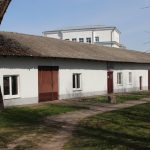
- building of the Jewish Resistance Museum in Novogrudok
-
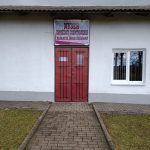
- entrance to the Jewish Resistance Museum
-
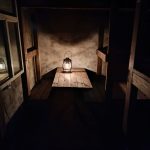
- exhibition at the Museum of Jewish Resistance
-
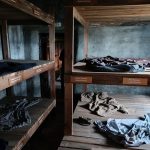
- prisoner bunks – Museum of Jewish Resistance
a historic agreement – and a shocking u-turn
In July 2025, a landmark agreement was signed to establish Belarus’s first Holocaust museum at the Novogrudok site. The agreement was initiated by Artur Livshyts, Chairman of the Jewish Religious Union of Belarus, and signed between the Jewish Religious Union, the Mir Foundation and the Novogrudok Municipality. It was a moment of genuine hope.
That hope was shattered in May 2026, when it emerged that three buildings forming part of the former labour camp complex – including the building intended to house the new museum – had been sold at auction to a private commercial company. None of the signatory partners had been informed of the planned auction. The municipality had not formally terminated the July 2025 agreement before proceeding with the sale.
Concerns quickly emerged about the nature of the proposed development. Plans described to those who met with the Mayor of Novogrudok on 26 May appeared to include elements widely regarded as deeply inappropriate for a site of this character: simulated barking dogs, mannequins dressed as guards, reconstructed watchtowers and barbed wire. Reports suggested that mannequins had already been ordered from China. The new owners have since stated that they had no intention of creating an “amusement park” – but those who met with the Mayor on site have reported that elements of this nature remained part of the concept at that time.
“Do we really wish to turn the suffering into an attraction?”
-
- future Holocaust museum building

-
- building assigned for renovation for the new Holocaust Museum in Novogrudok

-
- the basement area of the building that was part of the Novogrudok Ghetto which was supposed to have been renovated for a second symposium in August 2026, but which is now under new ownership

-
- Wall of Memory on the grounds of the Jewish Resistance Museum

The Together Plan’s online event – 24 June 2026
In response to these developments, The Together Plan convened an online event bringing together three speakers with direct personal and professional connections to the Novogrudok story. The event provided a space for open discussion of what has happened, what the implications are, and what must happen next. What follows are highlights from each speaker’s contribution.
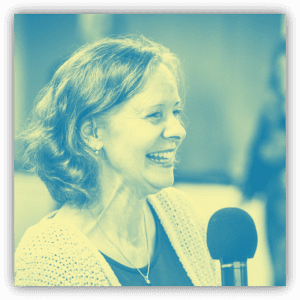
Lady Esther Gilbert – Historian and author, Canada
Lady Gilbert, who has been involved in Holocaust commemoration and education for forty years and has managed the literary estate of Sir Martin Gilbert since his death, drew a powerful contrast between sites of authentic history and those that erase or distort it.
She described visiting Sarny – her mother’s hometown, just south of the Belarusian border – and finding a local museum from which all trace of Jewish and Polish life had been removed. “The only sign of Jewish life was at the mass murder site,” she said. “I would bet that young people in Sarny today have no idea who helped to build their town.”
She contrasted this with the Anne Frank House in Amsterdam, where the authentic, unmediated encounter with history carries its own profound weight, and with the legacy of Jack Kagan, who spent his life ensuring that the story of the Jews of Novogrudok was known and honoured.
“We owe it to those who were murdered. We owe it to those who somehow, against all odds, managed to escape being murdered. We owe it to those who tried so unceasingly to ensure their stories are told, remembered and honoured. And we owe it to the next generations to ensure that the authentic, true history is represented properly and honourably in the place where it happened.”
She closed by thanking The Together Plan, and Artur Livshyts and Debra Brunner specifically, for alerting the wider community to the situation. “Belarusians, past, present and future generations will be grateful for their insistence on honouring the authenticity of their history.”
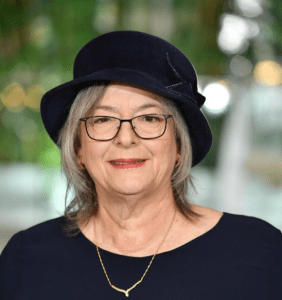
Dr Betty Cohen – Author of ‘Tunnel of Hope’; daughter of tunnel escapee Fanya Dunetz Brodsky, Israel
Dr Cohen, who spent seventeen years researching and writing the definitive account of the Novogrudok escape, identifying 227 of the approximately 240 escapees and finding that at least 133 survived, spoke with clarity and emotion about what is at stake.
She described her shock at learning in May 2026 that the site had been sold, and at the details that emerged about the proposed development. Among her concerns: the conversion of a former labour camp building where prisoners had suffered immeasurably into a hotel; plans to recreate the escape tunnel as a visitor attraction with mannequins crawling through it; and the absence of any governmental or professional oversight of the new project.
“One of the issues I feel should concern us most deeply is the transfer of this historically significant site into private ownership. Who can guarantee that in ten years’ time, the developers won’t lose interest in maintaining a museum? And what will happen if ownership is transferred to heirs or future investors? At any stage, this holy site could potentially be repurposed into something entirely different.”
Dr Cohen also addressed the question of the proposed new board directly. She confirmed that she had been invited to join it – and had refused.
“I can’t work with people who are not transparent, who are not honest and don’t have dialogue. For them, my presence will legitimise whatever they do, and I won’t add my name to that. They offered to translate my book so it can be used in the museum and I said no thank you. I can’t be bought.”
She called for the site to remain under public ownership, so that its preservation, historical research, educational mission and stewardship can be properly managed and overseen: “There are so many ways that are dignified and respectful to commemorate the extraordinary courage, resilience and resourcefulness demonstrated by our parents and others who escaped.”
Shifra Poupko – PhD scholar; educator and guide at Yad Vashem; member of The Together Plan’s advisory board, Israel
Shifra Poupko, whose doctoral research focuses on Holocaust memorialisation in Eastern Europe, brought a scholarly perspective to the evening, setting the Novogrudok situation within the broader challenge of Holocaust commemoration in the former Soviet Union, where official narratives have long emphasised Soviet suffering while minimising the unique experience of Jewish victims.
She acknowledged that The Together Plan had always anticipated challenges in establishing Belarus’s first Holocaust museum – around political realities, financial constraints, and questions of historical interpretation. What had not been anticipated was the nature of the challenge that has now emerged.

“Independent and international scholarship is essential – it is indeed non-negotiable for ensuring a historically accurate account of the Holocaust in Belarus. And yet the newly proposed board appears to lack these perspectives entirely. There is not a single independent or international Holocaust scholar represented, and only one of the descendants of the 133 survivors of the Novogrudok escape is represented on the board of the new museum.”
She pointed to the absence of any formal consultation process – no survey, no outreach to survivors, descendants, scholars, local Jewish communities or other stakeholders – and questioned the governance structure of the new project, in which commercial interests appear to be driving decisions at a site that demands the opposite approach.
“Holocaust memorial sites can never be evaluated through the lens of tourism or economic development. The purpose of this site – the Novogrudok Ghetto, the workshops and the tunnel – can only be focused on remembrance, education and historical preservation. It carries a historical responsibility that extends far beyond local tourism or economic development.”
She closed with a challenge to everyone present: “Would any Holocaust museum in Europe, or in Israel, or in North America be considered credible if the governing board contained not a single independent or international scholar? Of course the answer is no. So why should Novogrudok be any different?”
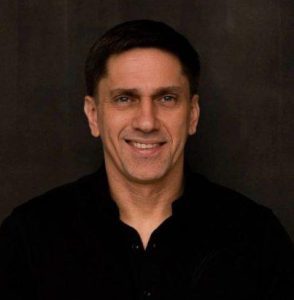
Artur Livshyts – Co-Founder of The Together Plan; Chairman of the Jewish Religious Union of Belarus
Artur Livshyts, who initiated the original July 2025 museum agreement and who represents sixteen Jewish communities in Belarus in his role as Chairman of the Jewish Religious Union, spoke about what this moment means from the ground in Belarus.
“This is our heritage and this is our memory. Our heritage and memory are the very foundations of our identity. To me, not just as Chair of the Jewish Community, but as a Jew living in this country, it is very important that it is kept and told properly.
Turning Jewish past and Jewish heritage into private ownership could lead to the rise of the level of antisemitism. And when everything becomes an argument, without involvement of the local Jewish community, it adds fuel to the fire.”
He spoke of The Together Plan’s longstanding commitment to consulting not only local Jewish communities but world experts, descendants, and all those with connections to the places whose history is being preserved. He noted that hundreds of thousands – perhaps millions – of Jewish people around the world have their roots in Belarus and the surrounding territory, and that they too have the right to own this past.
“We can’t have our future without our past. I believe this is our duty. We were not silent. We have been very loud in what we’ve been saying, and we believe this has pressured the new owners. As a result, they seem to be trying to show they are changing their vision somewhat – as I think they understand that the world Jewish community is closely watching what is going on.”
The Together Plan’s advisory board and how it came into being
In 2025, following the signing of a formal cooperation agreement with the Novogrudok Municipality in July, The Together Plan and the Jewish Religious Union of Belarus established a specialist Advisory Board to support the initial development of what was intended to become Belarus’s first Holocaust Museum.
The Advisory Board brought together internationally respected scholars, historians, researchers, and educators with extensive expertise in Holocaust history, remembrance, education, and memorialisation. Its members are:
- Shifra Poupko – Scholar, educator, and guide at Yad Vashem, Israel.
- Professor Joanna Beata Michlic – Social and cultural historian, author, and leading specialist in the history and memorialisation of the Holocaust, antisemitism, nationalism, and East European Jewish childhood and family life.
- Professor Jon Silverman – Emeritus Professor of Media and Criminal Justice at the University of Bedfordshire and former BBC Home Affairs Correspondent who received the Sony Radio Journalist of the Year Award for his reporting on the United Kingdom’s investigations into Nazi collaborators.
- Dr Martin Dean – Historian, author, and researcher. He holds a PhD in European History from Queens’ College, Cambridge, and has worked as a researcher for the Special Investigations Unit in Sydney, Australia, and as Senior Historian for the Metropolitan Police War Crimes Unit in London. He has served as an expert witness and advisor in six Nazi war crimes trials.
Members of the Advisory Board participated virtually in the symposium held in Novogrudok in July 2025, contributing their expertise and addressing participants during the proceedings.
At the symposium, it was agreed that the Novogrudok Municipality would undertake the renovation of the basement space within the building designated to house the future museum. It was further agreed that a second symposium would take place in this renovated space in August 2026. All parties understood these activities to constitute the first phase of the museum’s development, laying the foundations for a long-term project dedicated to Holocaust remembrance, education, and the preservation of Jewish heritage in Belarus. Sadly – this did not progress.
what was concluded at the event on June 24th and the thought process at this stage
What came out of the talk on June 24th were some clear and present concerns:
- Public ownership: the site should be returned to public ownership, with legal protections guaranteeing its preservation and purpose in perpetuity
- Genuine consultation: a formal, open process engaging descendants, international Holocaust scholars, the local Novogrudok Jewish community and all relevant stakeholders – not selective bilateral conversations
- Professional governance: a board that includes independent and international Holocaust scholars, recognised experts in large-scale museum development, representatives of the local Jewish community and meaningful representation from the descendant community
- Historical rigour: an interpretive approach developed with the descendant community and the scholarly community, not imposed upon them
- Transparency: full public disclosure of ownership, funding, governance structures and long-term plans for the site
The story of Novogrudok – of the courage of those who dug that tunnel, of the lives of those who did not make it out, and of the community that was destroyed – belongs to the descendants who carry it. It belongs to the historians who have spent careers documenting it. It belongs to the local communities of Belarus who live alongside its memory. And it belongs to the wider Jewish world.
As Artur Livshyts said on 24 June: “We are Jews. We are a community. We can’t have our future without our past.”
The Together Plan will continue to monitor developments at Novogrudok closely, to advocate for the principles of transparency, genuine consultation and responsible stewardship, and to ensure that the voices of descendants and scholars remain at the centre of this conversation. We will keep our community informed as this situation develops.