On October 26th, the Minsk Jewish Heritage Centre hosted a poignant gathering to mark its second anniversary, a celebration of community that also served as a powerful act of remembrance. The Centre’s was made possible with thanks to the generosity of our supporters. It’s founding in October 2023, which occurred in the shadow of the October 7th atrocities, stood as a profound testament to the enduring resilience of the Jewish people. This spirit of survival is woven into the very fabric of the Centre’s mission in Belarus, a land marked by centuries of antisemitism, from pre-Holocaust pogroms to the largely unexamined horrors of the 1941-44 massacres and ghettos.
Housed in a wing of the Daumana Street Synagogue, the Centre has rapidly become a vital heart for Jewish life in Minsk. In just two years, it has exceeded all expectations, hosting numerous exhibitions, Jewish weddings, holiday celebrations, and over 200 religious and cultural events. To date, more than 10,000 visitors from Minsk, across Belarus, and abroad have passed through its doors, affirming its role as an essential and beloved institution.
The anniversary event solemnly commemorated the 80th anniversary of the liquidation of the Minsk Ghetto on October 21st-23rd, 1943. Between 1941 and 1943, over 100,000 Jews were imprisoned in the Minsk Ghetto, the fourth largest in Europe, a history that remains tragically overlooked. The ghetto was a place of immense barbarity, where the only survivors were those who managed to escape to join partisan fighters in the surrounding forests or a handful who endured by hiding in a subterranean hideout.
-

-
Frida Reizman, Ghetto survivor presented with flowers for her 90th birthday Photo credit: The Together Plan
-
-
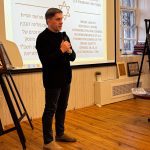
Artur Livshyts speaking about the plaque that marks the Minsk Jewish Heritage Centre Photo credit: The Together Plan
-
-
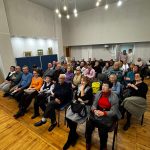
Attendees of the anniversary event Photo credit: The Together Plan
The ceremony was honoured by the presence of two of these survivors – Frida Reizman, Chair of the Minsk Ghetto Survivors’ Association, and Vladimir Trachtenberg. In a moving tribute, Frida was presented with a bouquet of flowers in celebration of her 90th birthday.
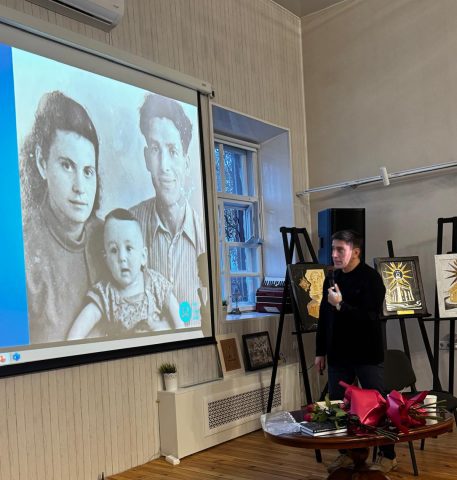
The event featured a screening of the powerful film ‘Yama’ (The Pit), which documents the site of the largest punitive action inside the ghetto, a former quarry within the ghetto where 5,000 Jews were murdered. Rabbi Mordechai Raichentstein recited the Kaddish prayer (prayer for the dead), and Artur Livshyts presented a haunting archive of images from Minsk between 1941 and 1943, including photographs of survivors like Polina Dobkina, the Centre’s namesake.
-
-
Maya Krapina and Frida Reizman – Minsk Ghetto Survivors Photo credit: The Together Plan
-
-
Polina Dobkina and family in USA Photo credit: The Together Plan
-
-
Presentation of images about the Minsk Ghetto and survivors Photo credit: The Together Plan
-
-
Polina Dobkina (Minsk Ghetto survivor) with family after the war Photo credit: The Together Plan
The community turnout was profound, reflecting a deep gratitude for the efforts to preserve this crucial history. The event was so impactful that a follow-up series of talks is now being planned, featuring survivors sharing their personal experiences from the ghetto.
Today, the Minsk Jewish Heritage Centre stands as a central meeting space and a source of immense pride, a living promise to keep these essential stories of loss, resistance, and resilience alive for generations to come.
Please help us to continue our work preserving Jewish history, heritage and identity by donating today using this link or if you are in the USA please use this link. Everything we do is because of your continued support.